776BC ACADEMY:

6 PERSPECTIVES ON RACE DAY

RACE DAY.

You awake in the dark, and the day is already in your chest. Nerves, adrenaline, excitement.

Whether it is your first regatta or your hundredth. Your last race in your school colours or an Olympic final. A title to defend, a season to redeem, a self to prove. The years in the boat teach you a lot.

We spoke to six voices from across the sport to learn how they prepare for the moments that matters most.

An Olympic champion. A Paralympic silver medallist. A varsity coach. A cox. A high school graduate. A performance nutritionist.

Different journeys. Different perspectives. One shared truth: race day is won long before the start line.

Race day doesn't reward the athlete who tries to become someone new on the day. It rewards the athlete who has already done the work, and remembered who they are.

Have confidence in your training. The line you crosses on the day is the smallest visible piece of the months that led to it.

Explore the voices below

DIVE DEEPER

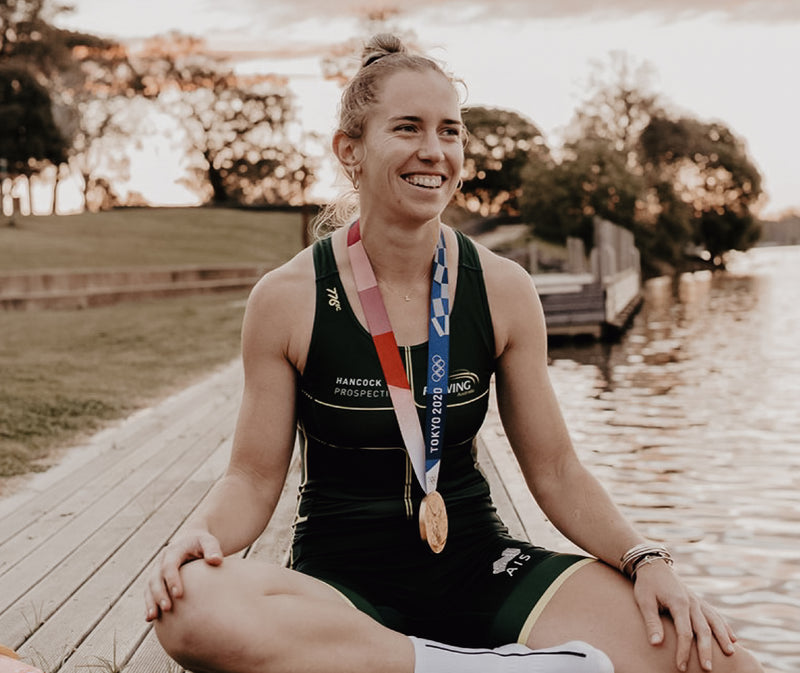
LUCY STEPHAN

3x Olympian, 2020 Tokyo Olympic Champion in the Women's 4-

"I was a good rower because I was Lucy Stephan. Because I remembered my roots."

What an Olympic gold and years in the sport taught her about training, losing, and staying true to yourself.

Read more

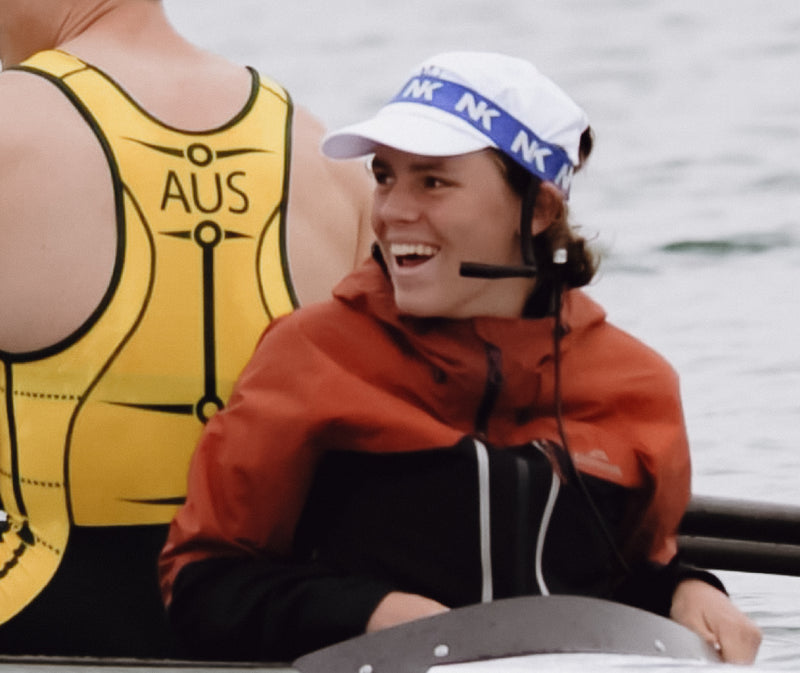
CHARLIE DURKIN

Cox Coach Founder

"There's always good things you can pull out of bad races and there's always bad things you can pull out of good races."

A cox on why the six minutes on the water are the smallest part of it.

Read more

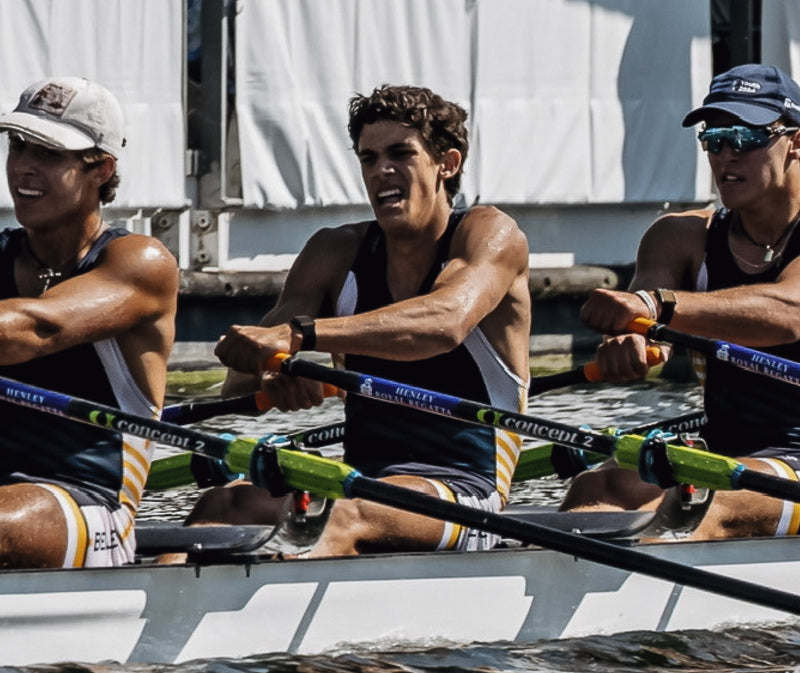
FELIX CACERES

Belen Jesuit Preparatory School, Class of 2026. 3x Henley Royal Regatta competitor.

"I look at the guy in front of me and remember the brotherhood we have. When I think of who I'm pulling for, that calms my nerves."

A high school senior on what changed between his first race and his last one in school colours.

Read more

JULIA BONE

Senior Performance Nutritionist, High Performance Sport New Zealand.

"The golden rule in sports nutrition is you don't try something new on race day."

A performance nutritionist on why race day fuelling should be the last thing on your mind.

Read more

MIKE O'HARA

Head Varsity Girls Coach, Saugatuck Rowing Club

"You're going to be told no more than yes in your life. It's up to you what you do with it."

A coach on the word every athlete has to make peace with, and the mentality that keeps you in the sport.

Read more

SKYLAR DAHL

Paralympian, 2024 Paris Silver Medallist in the PR3 Mixed 4+

"You can tell someone. You don't know how hard this sport can be until you live it."

From her first race to a Paralympic final. What Sky built between the two.

Read more
776BC Academy · Race Day01 / 06

LUCY STEPHAN OAM ON THE TRUTH ABOUT GRIT

What an Olympic gold and years in the sport taught her about training, losing, and staying true to yourself.

Lucy Stephan OAM knows what this sport asks of the people who go all in. To her, racing was the easy part.

"Training is harder than racing."

"When you've seen one another go to their wits end to try and get their bow ball in front at training, you know just how hard they're going to push on race day. That makes you trust one another."

Lucy Stephan OAM

3x Olympian, 2020 Tokyo Olympic Champion

THE LOSSES THAT MAKE YOU

The truth about grit, Lucy says, is that it is not a personality trait you are born with. It’s built.

"You almost need to lose races to become a better rower."

Losing is not a failure of the athlete. It's part of how we're made. Grit gets built in the days you would rather not talk about. In training. In defeat. In showing up again the morning after.

"I think every athlete has to have grit and determination because it's hard. It's really hard."

REMEMBER WHERE YOU CAME FROM

Ask Lucy what she would tell a younger athlete now.

"I would remember my roots and remember who I am. I was a good rower because I was Lucy Stephan. Because I remembered my roots. While you're trying to be a better athlete, don't forget what got you in there in the first place."

The athlete you are becoming is not somebody new. It is the person you already are.

THE LESSON

Race day doesn't reward the athlete who avoids the hard days. It rewards the ones who have already lived through them, and remembered where they came from.

In conversation with Lucy Stephan OAM and five other voices in the sport: Race Day is Won and Lost Before You Arrive.

776BC Academy · Race Day02 / 06

CHARLIE DURKIN ON THE RACE THAT LASTS A SEASON

Cox Coach Founder on why the 6 or 7 minutes on the water are a small part of a bigger picture.

Charlie Durkin trialled for the Australian Olympic Cox seat at just 18. He now runs Cox Coach, a program built specifically for the next generation of coxswains.

He’s spent his career leading crews down courses. He's learnt that physical training is only part of race day, the mental preparation part is quieter. It’s harder to see and teach and can’t be measured on any erg or test. It shows up only when it matters.

"Your race as a cox is not the 6 or 7 minute interval that you're on the water and racing down the track. You have an impact that's season long. It's not necessarily race long."

The line the crew crosses on the day is the smallest visible piece of the months that led to it.

RACE DAY IS NOT WHERE THE RACE IS WON

It’s won in the countless hours of practice that prepare you to step up to the line with confidence. In yourself. In your crew. The best thing a cox can do on race day is not something new. It’s a version of something they have already done a hundred times.

"You don't turn up at the start line and do something miraculous. You're trying to replicate the best thing that you've done in training."

THE POWER IN GETTING IT WRONG

Every cox will make mistakes. Every crew will have a race that does not go the way it was planned.

"You don't actually need to get everything right. You could stuff something up massively. It's about how you respond and adapt to it that matters."

We can’t all win. Not every day. Some are a podium finish. Some are the lesson.

LEARNING FROM EVERY RACE

"There's always good things you can pull out of bad races and there's always bad things you can pull out of good races."

Charlie's advice for coxes is simple.

"Not to get emotionally too caught up in the nuts and bolts of it and just work on how am I going to show up better next time."

Race day doesn't reward the cox who tries to be extraordinary on the day. It rewards the one who trusts the work, responds to what happens, and takes the lesson home.

In conversation with Charlie Durkin and five other voices in the sport: Race Day is Won and Lost Before You Arrive.

776BC Academy · Race Day03 / 06

FELIX CACERES ON RACING FOR SOMEONE OTHER THAN YOURSELF

On brotherhood, consistency, and what a high school career taught him about racing for others.

Felix Caceres is a recent graduate from Belen Jesuit Preparatory School in Miami, and a three-time Henley Royal Regatta competitor. He just closed his high school rowing career.

He recalls his first race as confusion -

"I think what I remember from my first race, just kind of just being a little lost. I mean, I remember it was a head race, so I was very confused. I was like, where's the other boats? Who are we racing against?"

Three seasons on, at his third Henley, he sits on the start line and knows exactly what to expect. The nerves are still there, but they mean something different now.

"I understand that's just my mind and my body preparing itself for what's about to happen."

BEFORE THE START

When the nerves hit: Breathe. Visualise. Trust the training.Felix has two moves.

"You just have to think you’re the best. You put in all this work for this one moment. So you kind of have to go back and understand you've trained so hard to be here."

"Look at the guy in front of you. You know you're going to pull with them now. The brotherhood we've had in that entire boat calm my nerves and know who I'm pulling for."

TALENT IS NOT THE BOTTOM LINE

Trust that the work compounds.

"This sport is mostly built on consistency. Rowing isn't the type of sport where a few hard workouts and you're at that elite level. You could go months and not see any improvement. But if you keep training, keep training, you'll always see improvement in the long run."

THE LESSON

Race day doesn't reward the athlete who’s trying to prove something on their own. It rewards the crew who arrived together, and the athlete who kept showing up.

In conversation with Felix Caceres and five other voices in the sport: Race Day is Won and Lost Before You Arrive.

776BC Academy · Race Day04 / 06

JULIA BONE ON GETTING RACE DAY FUEL RIGHT

A Performance Nutritionist on race day nutrition and why it should be the last thing on your mind on race day.

Julia Bone is a Senior Performance Nutritionist at High Performance Sport New Zealand, working directly with the New Zealand rowing team.

According to Julia, nutrition is the part of race day most athletes think about last, and get wrong first. Usually because they’re trying to fix on the day what they should have practised weeks before.

"The golden rule in sports nutrition is you don't try something new on race day."

"If you've been able to practise what you're going to do beforehand with your nutrition, then you can just focus on the race, and the nutrition kind of takes care of itself."

GET THE BASICS RIGHT

Julia recommends a pre-race meal two to three hours before the race. Higher carbohydrate, lower fibre. Not too much protein. A top-up 20-30 minutes out. A banana, handful of lollies, sports drink or juice. Start the day well hydrated and to drink water with each meal.

None of it new on the day. All of it practised.

MULTI-RACE DAYS

According to Julia, on multi-race days, the same rule applies with tighter margins.

Under an hour between races, she recommends liquids. One to two hours, a small carbohydrate top-up. Two to three hours, a proper meal you have eaten a hundred times before.

Multi-race days magnify small nutrition mistakes. The way to survive them is to have already made the decisions.

THE LESSON

Race day doesn't reward the athlete who reaches for something new. It rewards the athlete who has already done the work.

In conversation with Julia Bone and five other voices in the sport: Race Day is Won and Lost Before You Arrive.

776BC Academy · Race Day05 / 06

MIKE O'HARA ON THE MINDSET THAT KEEPS YOU IN THIS SPORT

A head coach on the word every athlete has to make peace with.

Mike O'Hara has spent twenty years in rowing, first as an athlete now the Head Varsity Girls Coach at Saugatuck Rowing Club, one of the most competitive junior rowing programs in the United States.

NOTHING TO CONTROL EXCEPT WHAT GOT YOU THERE

The most common mistake Mike sees in young athletes is the belief that race day is where the race is decided.

"As you get more veteran in your career, you realise that there's nothing you can control on race day except what we did to get there."

Control the controllables.

Race day does not care whether you slept well. Whether the wind is up. Whether the crew next to you is faster. Everybody wants to win. Not everyone can.

"There aren't any surprises on race day. We are who we are."

This is where the sport becomes honest with you. The result is not entirely yours. What is yours is what you built to get there.

"If you try to control what you can't, you've already lost the race. You're giving seats away by trying to put a harness around something that is basically moving water, which is impossible."

WHAT YOU TAKE FROM RACE DAY

"Every time you leave the race course, you're going to win, even if your bow ball doesn't cross first. If you can learn about yourself and better yourself, that's a win."

Mike coaches through the losses more than the wins. He believes this is where the athlete is actually built.

"You can either let the loss linger or turn it into a lesson. You can have a win and learn nothing."

REFLECT. REFOCUS.

Mike came up as an undersized athlete who was told no, more times than he could count. He learned young that the size of the athlete is not the point. He built a doctrine out of what he had learned, and he still teaches it now.

"Athletes work hard to create a chance at winning. A champion works even harder to eliminate the chance of losing."

You are going to be told no. You're not always going to win. What matters is what you do next.

THE LESSON

Race day doesn't show you who you wish you were. It shows you who you have already become. And what you do with that is up to you.

In conversation with Mike O'Hara and five other voices in the sport: Race Day is Won and Lost Before You Arrive.

776BC Academy · Race Day06 / 06

Skylar Dahl on turning race day nerves into fuel

From her first race to a silver medal at the Paris Paralympics.

Skylar Dahl is a Paralympic silver medallist. She has been in the sport nearly a decade, and she still remembers her first race.

“I remember being so, so nervous and ... 100% nerves. At that point in time, I was just like, wow, I’m here. I feel like I started rowing 5 minutes ago.”

Years later sitting in the boat at the Paralympic final in Paris, the nerves were gone. Not because the nerves stopped coming. Because she had built the tools to trust what she was bringing to the line.

Reframing race day nerves

Nerves are not a signal that something is wrong. They are the body preparing to fight.

“Let’s just turn this to excited because you’re excited. You want to be doing this. So this is exactly where you want to be. Just call that excitement, because it feels much the same.”

Both are the same jitter. Same tightness. Same racing pulse. What you call it is a choice. What you call it changes what it does.

Trust in the boat

By the time Sky got to the Paralympic final in Paris, the nerves had not disappeared. She shifted them into something usable.

“I knew what we were going to do. I knew my boat. I had all the trust in the world in my boat, genuinely, and I knew it was gonna happen.”

Trust in the crew. Trust in the preparation. Trust in what months of work had built.

The last five hundred was an out of body experience. She was pulling harder than she had ever pulled, individually and collectively.

“It’s like you, in the same second, cross the finish line at the buzzer, and then also you’re like, oh my God, it’s over. It was immediate tears. Just raw emotion.”

The lesson

Some of what this sport teaches you cannot be given. It has to be lived. The tools you are building right now are the tools that will hold when the start line arrives.

Race day doesn’t reward panic. It rewards preparation. Nerves are not a problem to fix. They are a signal that you are exactly where you want to be.

In conversation with Skylar Dahl and five other voices in the sport: Race Day is Won and Lost Before You Arrive.

BACK TO TOP